A nonprofit hospital system described as “moonlighting as a private equity firm” acknowledged a medication error at a Tennessee hospital that reportedly left two patients paralyzed and another on a ventilator.
Tennessee law says the noneconomic harm suffered by each paralyzed patient is worth no more than $1 million.
Ascension is a “nonprofit” but a STAT investigation found that the nonprofit hospital system has built a private equity operation worth more than $1 billion, actively making investments for profit and partnering with private equity firm TowerBrook Capital Partners.
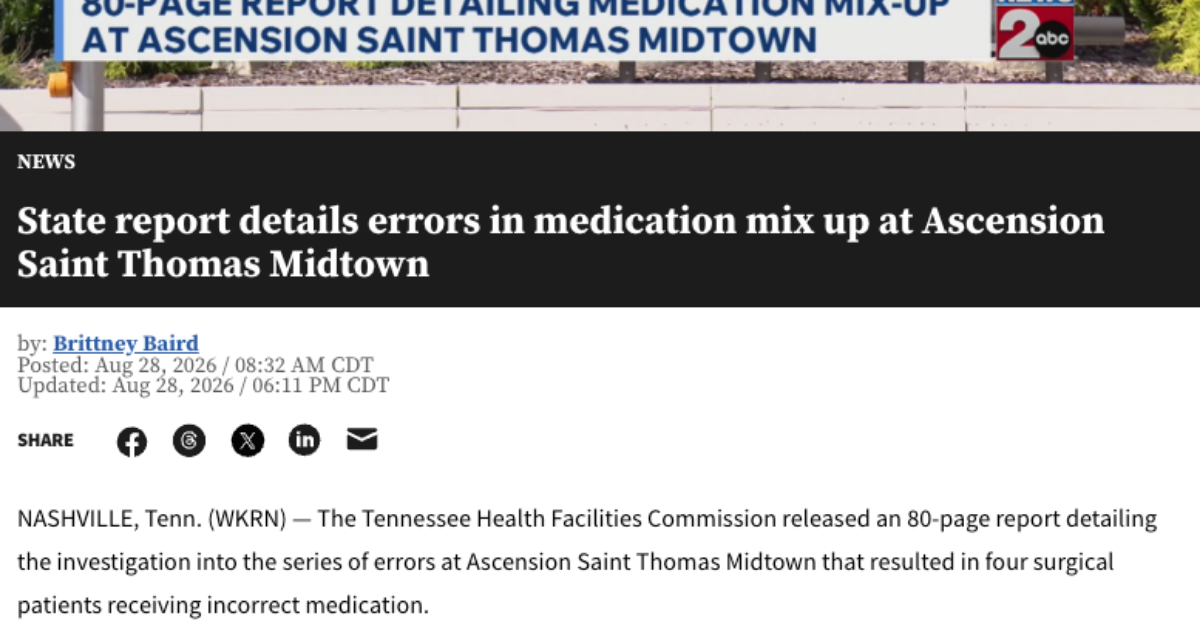
Ascension Saint Thomas Midtown, an Ascension hospital in Nashville, TN, has acknowledged that a pharmacy error caused four patients undergoing routine joint-replacement procedures to receive the wrong medication.
It appears at least two of the affected patients are over 65 and are likely Medicare beneficiaries. If Medicare pays their injury-related medical bills, those payments are conditional. When the patients recover compensation through a settlement or judgment, Medicare will demand reimbursement from that recovery.
So, yes, economic damages remain recoverable. But much of that money will end up going elsewhere.
That still leaves the human loss.
What is the value of losing the ability to walk? Of losing your independence, dignity, freedom, and the ordinary pleasures of life? What is the value of spending every remaining day of your life paralyzed?
Under Tennessee law, the legislature, not the jury that hears the evidence, has already decided: no more than $1 million in noneconomic damages.
Laws like this protect multi-billion dollar operations from paying the full extent of the harm it caused. They protect companies that put money over people and leave human suffering in the wake of their thirst for more.
Damage caps do not prevent negligence. They prevent full accountability and harm patients. And they reward so-called nonprofit hospital systems that act like private equity firms.
What do you think? Join the conversation with me on LinkedIn.