Key Takeaways
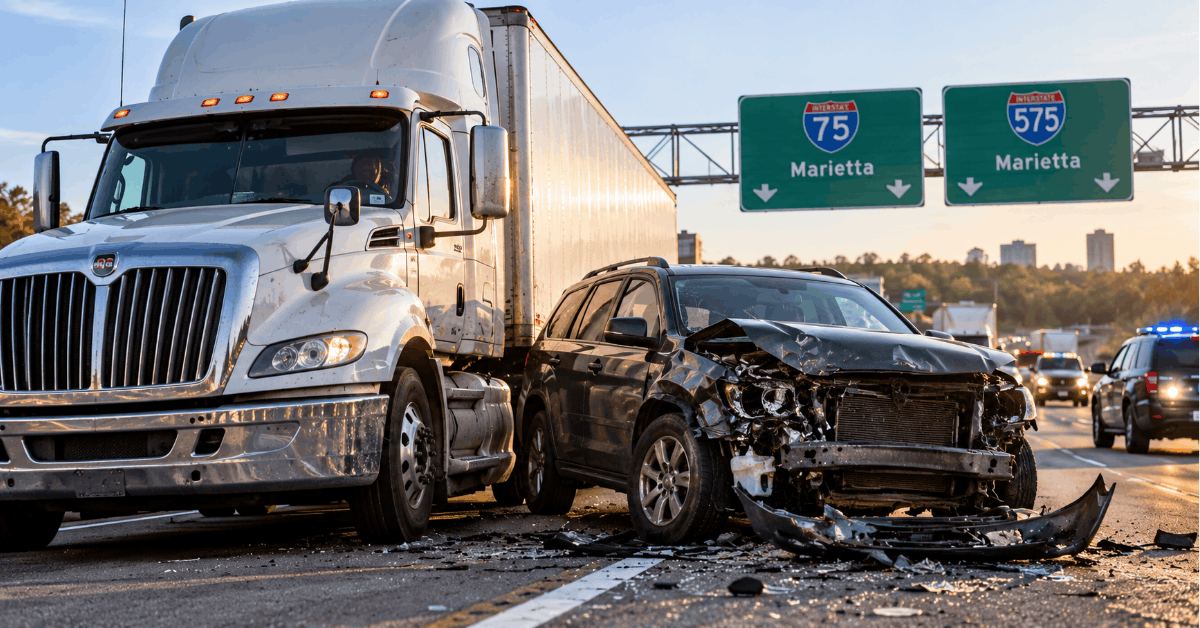
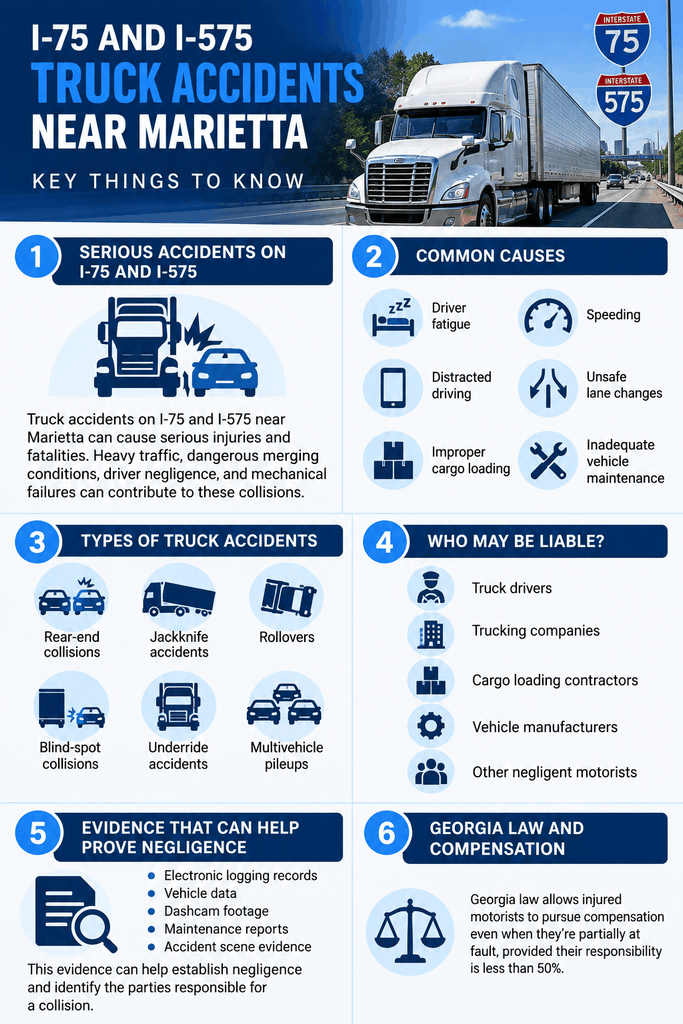
- Truck accidents on I-75 and I-575 near Marietta can cause serious injuries and fatalities. Heavy traffic, dangerous merging conditions, driver negligence, and mechanical failures can contribute to these collisions.
- Common causes of commercial truck accidents include driver fatigue, speeding, distracted driving, unsafe lane changes, improper cargo loading, and inadequate vehicle maintenance.
- Truck crashes can involve rear-end collisions, jackknife accidents, rollovers, blind-spot collisions, underride accidents, and multivehicle pileups, each presenting serious risks to surrounding motorists.
- Liability may extend beyond the truck driver to trucking companies, cargo loading contractors, vehicle manufacturers, and other negligent motorists.
- Electronic logging records, vehicle data, dashcam footage, maintenance reports, and accident scene evidence can help establish negligence and identify the parties responsible for a collision.
- Georgia law allows injured motorists to pursue compensation even when they're partially at fault, provided their responsibility is less than 50%.
Interstate 75 and Interstate 575 connect Marietta with Kennesaw, Woodstock, Atlanta, and other parts of Georgia. As major highways, they carry tractor-trailers as well as commuters and other motorists. While essential to local and state commerce, these huge commercial vehicles can cause serious accidents when drivers speed, follow too closely, or make unsafe lane changes.
At The Champion Firm, Personal Injury Attorneys, P.C., we represent people injured in commercial truck accidents throughout Marietta and the surrounding communities. In this guide, we'll explain the common causes of truck accidents on I-75 and I-575, who may be held liable, and how Georgia law affects your right to compensation.
Why Are I-75 and I-575 Dangerous for Truck Accidents Near Marietta?
I-75 and I-575 are major routes for commercial trucks traveling through Cobb County and into neighboring communities. Heavy commuter traffic, highway interchanges, and changing road conditions can increase the risk of collisions involving tractor-trailers. These hazards become particularly dangerous when truck drivers fail to adjust their speed, maintain adequate following distances, or account for vehicles entering and exiting the highway.
Heavy Traffic and Sudden Slowdowns on I-75
I-75 runs through Marietta, with interchanges at Delk Road, South Marietta Parkway, North Marietta Parkway, and Barrett Parkway. During busy commuting periods, traffic can slow abruptly as vehicles merge, change lanes, or approach congested exits. Truck drivers who follow too closely may lack sufficient distance to stop before striking vehicles ahead.
Note: A fully loaded tractor-trailer can weigh up to 80,000 pounds under standard federal interstate weight limits. Its weight and momentum increase the distance needed to stop, particularly on wet pavement or when traffic unexpectedly slows.
Merging and Lane Changes Near the I-75/I-575 Interchange
The I-75/I-575 interchange, located north of central Marietta near Kennesaw, connects two heavily traveled highways. Drivers entering I-75 from I-575 or moving toward an exit must account for surrounding traffic, including commercial trucks with large blind spots.
Truck drivers who change lanes without checking for nearby vehicles can cause sideswipe collisions or force smaller cars off the roadway. Abrupt merging maneuvers can also trigger chain-reaction crashes when surrounding drivers brake or swerve to avoid a collision.
Weather and Visibility Problems
Heavy rain and reduced visibility can make truck travel particularly hazardous on I-75 and I-575. Wet pavement reduces traction and increases stopping distances, while standing water can contribute to hydroplaning. Sudden steering or braking maneuvers may also cause a tractor-trailer to jackknife or overturn.
Georgia drivers must operate at speeds appropriate for existing conditions, even when traveling below the posted speed limit. Commercial truck drivers who fail to reduce speed during heavy rain or poor visibility may be liable when their negligence causes an accident.
What Are the Most Common Causes of Truck Accidents on I-75 and I-575?
Commercial truck accidents on I-75 and I-575 can result from driver negligence, improper cargo handling, and mechanical problems. Several factors may contribute to the same accident, particularly when heavy traffic leaves drivers with little time to react.
Truck Driver Fatigue
Truck drivers may travel hundreds of miles in a single shift while working under demanding delivery schedules. Driving without adequate rest can impair judgment, slow reaction times, and make it difficult to recognize stopped vehicles or changing traffic conditions.
Federal hours-of-service regulations limit driving time for most property-carrying commercial truck drivers. Under these rules, drivers may operate for up to 11 hours after 10 consecutive hours off duty, subject to a 14-hour driving window. Electronic logging device records can help establish if a driver exceeded these limits before a crash.
Speeding and Following Too Closely
Commercial trucks need greater stopping distances than passenger vehicles, particularly when they're carrying heavy loads. A truck driver who exceeds the speed limit or follows another vehicle too closely may be unable to stop when traffic suddenly slows.
On I-75 near Marietta, congestion around highway exits and interchanges can increase the likelihood of rear-end collisions. Even when a truck driver is traveling below the posted speed limit, driving too fast for traffic or weather conditions can constitute negligence.
Unsafe Lane Changes and Blind-Spot Accidents
Tractor-trailers have substantial blind spots along both sides of the vehicle, directly behind the trailer, and immediately in front of the cab. Drivers must check their mirrors, monitor surrounding traffic, and establish sufficient clearance before changing lanes.
A truck driver who merges without confirming that the adjacent lane is clear can strike another vehicle or force its driver into a guardrail. These accidents can occur near the I-75/I-575 interchange, where vehicles frequently enter, exit, and change lanes.
Distracted Driving
Truck drivers who use mobile phones, adjust navigation systems, or interact with dispatch equipment while driving may fail to notice traffic hazards. Looking away from the road for even a few seconds can prevent a driver from responding to brake lights, merging vehicles, or stopped traffic.
Federal regulations prohibit texting and restrict hand-held mobile phone use by drivers operating commercial motor vehicles; Georgia state law also prohibits anyone operating a vehicle from holding a phone while driving. Phone records, onboard camera footage, and electronic communications may help establish if distraction contributed to a collision.
Improper Cargo Loading and Unsecured Freight
Commercial trucks must carry cargo that is properly distributed and secured. Uneven loading can affect a truck's handling, while unsecured freight may shift during braking or lane changes. These conditions can contribute to rollovers, jackknife accidents, and loss of vehicle control.
When improperly loaded cargo causes an accident, liability may extend beyond the truck driver. A separate loading company, freight contractor, or other party responsible for securing the shipment may share responsibility if its negligence contributed to the crash.
Poor Truck Maintenance and Mechanical Failures
Commercial trucks need regular inspections and maintenance to remain safe for highway travel. Worn tires, defective brakes, steering problems, and neglected repairs can contribute to serious collisions, particularly when a truck is traveling at highway speeds.
Federal regulations impose inspection, repair, and maintenance duties on motor carriers. When a trucking company fails to maintain its vehicles, inspection reports, repair invoices, and maintenance records may reveal problems that existed before the accident. If a defective vehicle component caused the collision, the manufacturer may also face liability under applicable product liability laws.
What Types of Truck Accidents Happen on I-75 and I-575?
Common commercial truck accidents along these highways include:
- Rear-End Collisions: These accidents occur when a truck strikes a vehicle traveling ahead of it, usually because the driver is speeding, distracted, or following too closely. The force of impact can cause serious injuries, particularly when smaller vehicles are pushed into surrounding traffic.
- Jackknife Accidents: A jackknife happens when a tractor and its trailer fold toward each other, potentially blocking several traffic lanes. Sudden braking, slippery pavement, and improper braking techniques can contribute to these collisions.
- Truck Rollover Accidents: Tractor-trailers can overturn when drivers take curves too fast, make abrupt steering maneuvers, or transport improperly distributed cargo. An overturned truck can strike neighboring vehicles, spill freight, and obstruct highway traffic.
- Sideswipe and Blind-Spot Collisions: These accidents take place when a truck strikes a vehicle traveling in an adjacent lane. Failure to check blind spots, signal lane changes, or leave sufficient clearance can cause collisions near busy interchanges.
- Underride Accidents: An underride collision occurs when a smaller vehicle travels partially beneath a truck or trailer during a crash. These accidents can cause catastrophic head injuries, spinal cord damage, and fatalities.
- Multivehicle Pileups: A truck that strikes stopped traffic or loses control can trigger collisions involving several vehicles. Determining liability may involve examining the actions of multiple drivers and identifying which negligent acts contributed to the resulting injuries.
Who Can Be Held Liable for an I-75 or I-575 Truck Accident?
Depending on what caused the crash, you may have claims against the truck driver, the trucking company, cargo contractors, or other responsible parties. When multiple parties share fault, O.C.G.A. § 51-12-33 governs how responsibility is allocated and how your percentage of fault affects your compensation.
The Truck Driver
Truck drivers have a duty to operate their vehicles safely and follow traffic laws. Speeding, distracted driving, unsafe lane changes, following too closely, and driving while fatigued can support negligence claims when these actions cause an accident. Evidence such as electronic logging records, dashcam footage, witness statements, and vehicle data can help establish what the driver was doing before the collision.
The Trucking Company
A trucking company may be held responsible for its employee's negligence under the legal doctrine of respondeat superior when the driver causes an accident while acting within the scope of employment.
Trucking companies may also face direct negligence claims for:
- Hiring drivers with disqualifying records or inadequate qualifications.
- Failing to provide adequate driver training or supervision.
- Retaining drivers with known safety problems.
- Neglecting required vehicle inspections, maintenance, or repairs.
- Imposing delivery schedules that encourage unsafe driving practices.
Cargo Loading Companies and Freight Contractors
Improperly loaded freight can shift during transportation, affecting a truck's stability and handling. Overloaded trailers and unsecured cargo can also contribute to rollovers, jackknife accidents, and cargo spills.
If a separate company negligently loaded or secured the freight, it may share responsibility for the resulting collision. Investigators may review shipping documents, weight records, loading instructions, and cargo inspection reports to identify the responsible parties.
Truck and Parts Manufacturers
Some truck accidents result from defective vehicle components rather than inadequate maintenance or driver error. For example, faulty braking systems, defective tires, and steering component failures can cause drivers to lose control.
When a defective product contributes to a collision, you may have a product liability claim against the manufacturer or another responsible party. Establishing liability may involve examining the failed component, identifying the defect, and determining how it contributed to the accident.
Other Negligent Drivers
Another motorist may contribute to a truck accident by cutting in front of a tractor-trailer, making an unsafe lane change, or stopping unexpectedly without a lawful reason. These actions can lead to collisions involving multiple vehicles, particularly in congested highway traffic.
What Evidence Can Help Prove Liability After a Truck Accident?
- Electronic Vehicle Data: Engine control modules and other onboard systems may record vehicle speed, braking activity, throttle position, and other information preceding a collision. Investigators can examine available data to determine how the driver responded to traffic conditions.
- Electronic Logging Device Records: Federal regulations require many commercial truck drivers to record their driving hours electronically. These records can reveal potential hours-of-service violations that may have contributed to driver fatigue.
- Dashcam and Surveillance Footage: Recordings from commercial trucks, nearby businesses, and other vehicles may show unsafe lane changes, speeding, or driver behavior immediately before the crash.
- Driver Qualification Records: Employment histories, licensing information, training documentation, and driving records may reveal hiring or supervision failures by the trucking company.
- Maintenance and Inspection Records: Vehicle inspection reports, repair invoices, and maintenance histories can identify brake defects, worn tires, or other mechanical problems that weren't corrected before the collision.
- Accident Scene Evidence: Photographs, vehicle damage, debris patterns, skid marks, witness statements, and police reports can help investigators reconstruct the collision and identify contributing factors.
FAQs About I-75 and I-575 Truck Accidents
Yes. If an out-of-state truck driver causes an accident in Georgia, you may seek compensation under Georgia law. Commercial trucking companies regularly transport freight across state lines, and their drivers must comply with federal safety regulations and state traffic laws. The driver's residence or the trucking company's headquarters doesn't prevent you from filing a truck accident claim.
Commercial trucking arrangements sometimes involve different companies owning the tractor, supplying the trailer, employing the driver, and transporting the freight. These relationships can affect which businesses may be responsible after a collision.
For example, a company that leases a truck may have maintenance responsibilities under its agreement, while a motor carrier may have separate duties under federal trucking regulations. Investigators can review lease agreements, registration documents, insurance policies, and operating records to determine each company's responsibilities.
Contact The Champion Firm After an I-75 or I-575 Truck Accident Near Marietta
If you've been injured in a truck accident on I-75, I-575, or another highway in Georgia, you may have the right to pursue compensation from the parties responsible. At The Champion Firm, Personal Injury Attorneys, P.C., our Marietta truck accident lawyers investigate commercial vehicle collisions and pursue compensation for injured motorists and their families. For more information or to schedule a free consultation, call 404-637-1709. Hablamos Español.