
Key Takeaways
- A Georgia medical malpractice lawsuit lets injured patients seek compensation when a healthcare professional's negligence causes illness or injury.
- To recover compensation, you must establish four elements: duty of care, a breach of the accepted standard of care, causation, and compensable damages.
- Medical malpractice claims may arise from surgical errors, misdiagnosis, delayed diagnosis, medication errors, birth injuries, anesthesia errors, emergency room negligence, and hospital negligence.
- Georgia generally requires a qualified medical expert's affidavit when a medical malpractice lawsuit is filed, along with expert testimony to establish the applicable standard of care.
- Most claims must be brought within two years of the injury, although Georgia's statute of repose and limited statutory exceptions may affect the filing deadline.
- If you believe negligent medical care caused your injury, preserve your medical records and other documentation, continue receiving treatment, and contact The Champion Firm to evaluate your potential claim.
A medical malpractice lawsuit, also called a med mal lawsuit, is a civil claim against a healthcare professional or medical facility whose negligence caused you to suffer an illness or injury. To prevail at the negotiation table or in court, you need to show that the healthcare provider in question failed to meet the accepted standard of care and that the failure directly caused your injuries. Common examples of medical errors include:
- Missing an obvious illness or condition that another reasonably competent doctor would have caught.
- Unreasonable delays in ordering tests or interpreting results, allowing a disease (such as cancer) to advance, worsening the patient's prognosis.
- Accidentally leaving sponges, clamps, or other medical tools inside a patient's body after a medical procedure.
- Prescribing or dispensing the wrong drug, calculating the wrong dosage, or failing to account for dangerous drug interactions or known allergies.
- Failing to recognize fetal distress, unreasonably delaying a necessary Cesarean section (C-section), or misusing delivery instruments, which can lead to conditions like cerebral palsy or Erb's palsy.
If you think negligent medical care caused your injury, it's helpful to know what Georgia law requires before you may file an insurance claim. This guide explains what a med mal lawsuit is, the legal elements you must prove, the types of medical negligence that may support a claim, and what you may expect after a lawsuit is filed.
Med Mal Lawsuits: What They Are and When They Arise
A med mal lawsuit seeks compensation for injuries caused by negligent medical care. In Georgia, these claims may be filed against a doctor, nurse, hospital, clinic, or another licensed healthcare professional whose conduct fell below the accepted standard of care and caused harm. According to Valdosta Today, Georgia has a malpractice filing rate of 7.52 cases per 100,000 residents, which generally ranks among the lowest in the nation. Between 2013 and 2023, there were exactly 8,852 malpractice cases filed across the state.
Unlike many personal injury cases, a med mal lawsuit depends primarily on the medical evidence presented. The injured patient must show that another reasonably competent professional working under the same or similar conditions would have provided different treatment or made different medical decisions. Qualified medical testimony is generally needed to establish the applicable standard of care and explain how the defendant's conduct failed to meet it.
Medical malpractice lawsuits arise from many types of treatment, including:
- Surgery
- Emergency care
- Childbirth
- Diagnostic procedures
- Prescription medications
- Follow-up care
They may also involve hospital-acquired infections as well as failures to diagnose a medical condition, treatment delays, surgical mistakes, medication errors, or inadequate patient monitoring. What they all have in common is that you must prove that medical negligence caused the injury, not simply that medical treatment was unsuccessful or that your condition became worse.
What Must Be Proven in a Georgia Medical Malpractice Lawsuit?
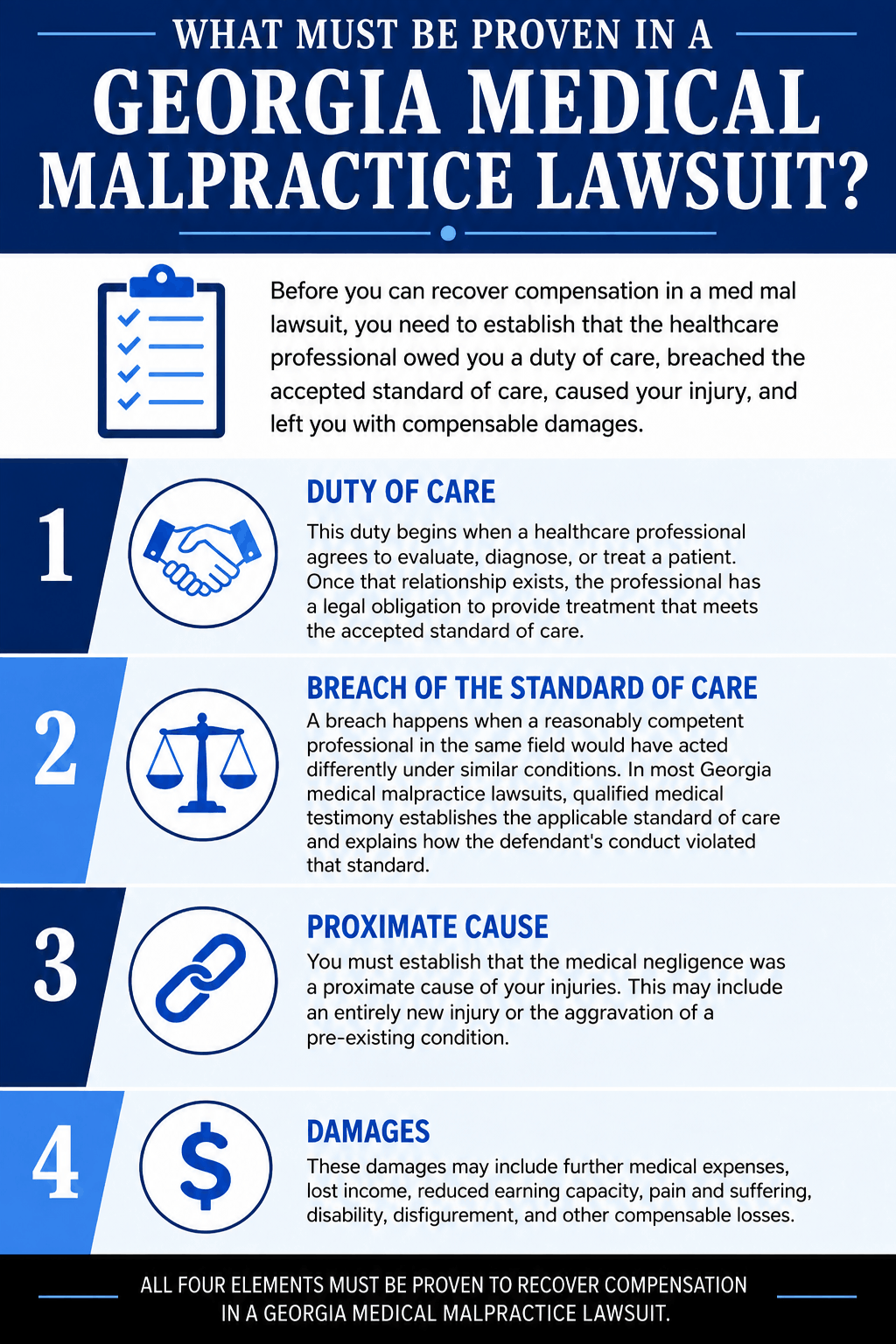
Before you can recover compensation in a med mal lawsuit, you need to establish that the healthcare professional owed you a duty of care, breached the accepted standard of care, caused your injury, and left you with economic and non-economic damages. Here’s what you need to know about each criterion.
- Duty of Care: The first element is the existence of a duty of care. This duty begins when there is a relationship between a healthcare professional and a patient. Once that relationship exists, the professional has a legal obligation to provide treatment that meets the accepted standard of care.
- Breach of the Standard of Care: A breach happens when a reasonably competent professional in the same field would have acted differently under similar conditions. In most Georgia medical malpractice lawsuits, qualified medical testimony establishes the applicable standard of care and explains how the defendant's conduct violated that standard.
- Proximate Cause: You must establish that the medical negligence was a proximate cause of your injuries. This may include an entirely new injury or the aggravation of a pre-existing condition.
- Damages: These economic and non-economic damages may include further medical bills, lost income, reduced earning capacity, pain and suffering, disability, disfigurement, and other compensable losses.
Common Types of Medical Malpractice Cases
Medical malpractice can occur in nearly any healthcare setting. The following are some of the most common types of medical malpractice lawsuits filed in Georgia.
- Surgical Errors: These medical malpractice claims may involve surgery performed on the wrong body part, the wrong procedure, retained surgical instruments (e.g. sponge left in the operation site after surgery), or injuries to nearby organs, nerves, or blood vessels.
- Misdiagnosis or Delayed Diagnosis: A missed diagnosis or delayed diagnosis can allow a medical condition to progress before appropriate treatment begins. These claims frequently involve a misdiagnosis of cancer, stroke, heart attack, sepsis, and other serious illnesses.
- Medication Errors: Medication errors can happen when a drug is prescribed, dispensed, or administered incorrectly. These cases can involve the wrong medication, an incorrect dosage, dangerous drug interactions, or medication given to the wrong patient.
- Birth Injuries: Obstetric negligence during pregnancy, labor, or delivery can injure both the mother and the child. These lawsuits may involve unrecognized fetal distress, an unnecessary delay in performing a cesarean delivery, improper use of forceps or a vacuum extractor, or a failure to respond to complications during labor.
- Anesthesia Complications: Anesthesia must be evaluated, administered, and monitored according to accepted medical standards. Malpractice claims may arise from an incorrect dosage, inadequate patient monitoring, improper airway management, or administering anesthesia despite known medical risks. These anesthesia errors can cause brain damage, cardiac injury, or death.
- Emergency Room Errors: A malpractice claim may arise when emergency personnel fail to recognize warning signs of a medical emergency, delay treatment, discharge a patient prematurely, or omit necessary diagnostic testing. These failures can allow life-threatening conditions to worsen.
- Hospital Negligence: Hospitals may be legally responsible in certain situations when negligent care contributes to a patient's injuries. Medical malpractice claims may involve nursing negligence, defective medical equipment, poor infection control practices, communication failures among medical staff, or preventable patient falls.
Who Can Be Sued for Medical Malpractice in Georgia?
A Georgia medical malpractice lawsuit may involve one defendant or several. Depending on the circumstances, claims may be filed against individual healthcare professionals, hospitals, clinics, or other medical entities.
- Physicians: Physicians are responsible for evaluating patients, making diagnoses, recommending treatment, performing procedures, and providing follow-up care. They may be named in a medical malpractice lawsuit if the evidence shows that treatment fell below the accepted standard of care and caused injury.
- Surgeons: Surgeons have a duty to perform operations in accordance with accepted medical standards. A malpractice claim may arise from negligent surgical techniques, surgery performed on the wrong body part, the wrong procedure, retained surgical instruments, or other surgical errors that caused injury.
- Nurses: Registered nurses and licensed practical nurses provide direct patient care, administer medications, monitor patients, and communicate changes in a patient's condition to other members of the medical team. A nurse may be held responsible if a breach of the accepted standard of care causes harm to a patient.
- Nurse Practitioners and Physician Assistants: Nurse practitioners and physician assistants examine patients, diagnose illnesses, prescribe medications, order diagnostic tests, and provide treatment. Like other licensed healthcare professionals, they may be named in a malpractice lawsuit if negligent care caused a patient's injuries.
- Anesthesiologists: Anesthesiologists evaluate patients before surgery, administer anesthesia, monitor vital signs throughout a procedure, and respond to medical emergencies in the operating room. Medical errors involving anesthesia can result in life-threatening injuries and may support a medical malpractice claim.
- Radiologists: Radiologists interpret X-rays, CT scans, MRIs, ultrasounds, and other diagnostic imaging studies. A radiologist may be sued if a negligent interpretation delays or prevents the diagnosis of a medical condition, resulting in further injury.
- Pharmacists: Pharmacists must dispense prescription medications accurately. A malpractice claim may arise if a pharmacist dispenses the wrong medication, provides the wrong dosage, or commits another dispensing error that causes injury.
- Hospitals and Medical Facilities: Hospitals, surgical centers, clinics, and other medical facilities may also be named as defendants. Depending on the evidence, a facility may be responsible for nursing negligence, inadequate staffing, poor infection control practices, unsafe policies, or the negligent conduct of employees acting within the scope of their employment.
How Does a Georgia Medical Malpractice Lawsuit Work?
Step 1: Obtain and Analyze Medical Records
The first step is obtaining the patient's medical records. These records include diagnoses, treatment notes, medication records, diagnostic test results, surgical reports, nursing documentation, and follow-up records. Examining these materials helps determine what happened during treatment and identify conduct that may have fallen below the accepted standard of care.
Step 2: Investigate the Claim
After the medical records have been analyzed, your Georgia medical malpractice attorney further evaluates the claim. This stage may include interviewing witnesses, examining diagnostic images and laboratory results, consulting medical literature, and identifying every healthcare professional or medical entity that may be legally responsible for the patient's injuries.
Step 3: Obtain a Medical Expert Affidavit
Georgia law generally requires a qualified medical expert to evaluate the claim before a lawsuit is filed. In most cases, the complaint must be accompanied by an affidavit identifying at least one negligent act or omission and the factual basis for that opinion, unless a statutory exception applies. This rule is established by O.C.G.A. § 9-11-9.1.
Step 4: File the Lawsuit
After the pre-suit requirements have been satisfied, the plaintiff files the lawsuit in the appropriate Georgia court. The defendants are then served with the complaint and given an opportunity to file an answer, raise legal defenses, and respond to the allegations.
Step 5: Discovery
Discovery allows both sides to exchange information that may be presented at trial. This stage commonly includes interrogatories, requests for documents, depositions, and testimony from qualified medical experts. Each side uses this information to evaluate the strengths and weaknesses of the claims and defenses before trial.
Step 6: Settlement Negotiations
Many medical malpractice lawsuits are resolved through a structured settlement instead of a trial. During negotiations, both sides consider the available proof, the damages being claimed, and the legal issues raised in the lawsuit. A settlement may be reached at any time before a verdict is returned.
Step 7: Trial
If the parties don't reach a settlement, the lawsuit generally proceeds to trial. Both sides present testimony, documents, and other admissible evidence to support their positions. A judge or jury then determines whether the plaintiff established each required legal element and, if liability is proven, the amount of damages recoverable.
How Long Do You Have to File a Medical Malpractice Lawsuit in Georgia?
Georgia’s Two-Year Statute of Limitations
Under O.C.G.A. § 9-3-71(a), a medical malpractice lawsuit generally must be commenced within two years of the date the injury or death occurred. If the claim isn't brought before this period expires, the court will generally dismiss the lawsuit.
Georgia's Five-Year Statute of Repose
Georgia also imposes a five-year statute of repose under O.C.G.A. § 9-3-71(b). In most cases, no medical malpractice lawsuit may be brought more than five years after the negligent act or omission, even if the injury wasn't discovered until a later date.
Limited Statutory Exceptions
Although these deadlines govern most medical malpractice claims, Georgia law recognizes limited exceptions. For example:
- Foreign Object Cases: When a foreign object is unintentionally left inside a patient's body during a medical procedure, a lawsuit generally may be brought within one year from the date the foreign object is discovered or reasonably should have been discovered, even if the standard two-year statute of limitations has expired.
- Claims Involving Young Children: Under O.C.G.A. § 9-3-73, there are different filing deadlines for children who were younger than five years old when the medical negligence occurred.
- Mental Incapacity and Other Statutory Provisions: Georgia also recognizes that legal disabilities, including mental incapacity, may affect the time available to bring certain claims.
Frequently Asked Questions About Med Mal Lawsuits
No. A medical mistake doesn't automatically amount to medical malpractice. To recover compensation, you must establish that a healthcare professional failed to provide treatment that met the accepted standard of care and that the failure directly caused your injury. Some patients experience complications or poor outcomes even when appropriate medical care was provided. A successful malpractice claim involves proof of medical negligence, causation, and compensable damages.
In most cases, yes. Georgia generally requires plaintiffs to file an affidavit from a qualified medical expert with the complaint. The affidavit must identify at least one negligent act or omission and explain the factual basis for that opinion, unless a statutory exception applies. Qualified medical testimony is also generally necessary during litigation to establish the accepted standard of care, explain how it was breached, and connect the medical negligence to the patient's injuries.
In some cases, yes. A hospital may be named as a defendant if the evidence supports liability. Depending on the claim, allegations against a hospital may involve vicarious liability for the negligence of an employee, institutional negligence, negligent credentialing, or inadequate staffing. Some claims involve both individual healthcare professionals and the hospital or medical facility where the treatment occurred.
Contact The Medical Malpractice Lawyers at The Champion Firm
If you believe negligent medical care caused your injury or contributed to the death of a loved one, contact The Champion Firm, Personal Injury Attorneys, P.C. for a free consultation. We'll review your situation, answer your questions, evaluate the available evidence, and determine whether you have grounds to pursue a medical malpractice lawsuit. For more information or to schedule a free consultation, call our personal injury law firm at 404-637-1709. Hablamos Español.