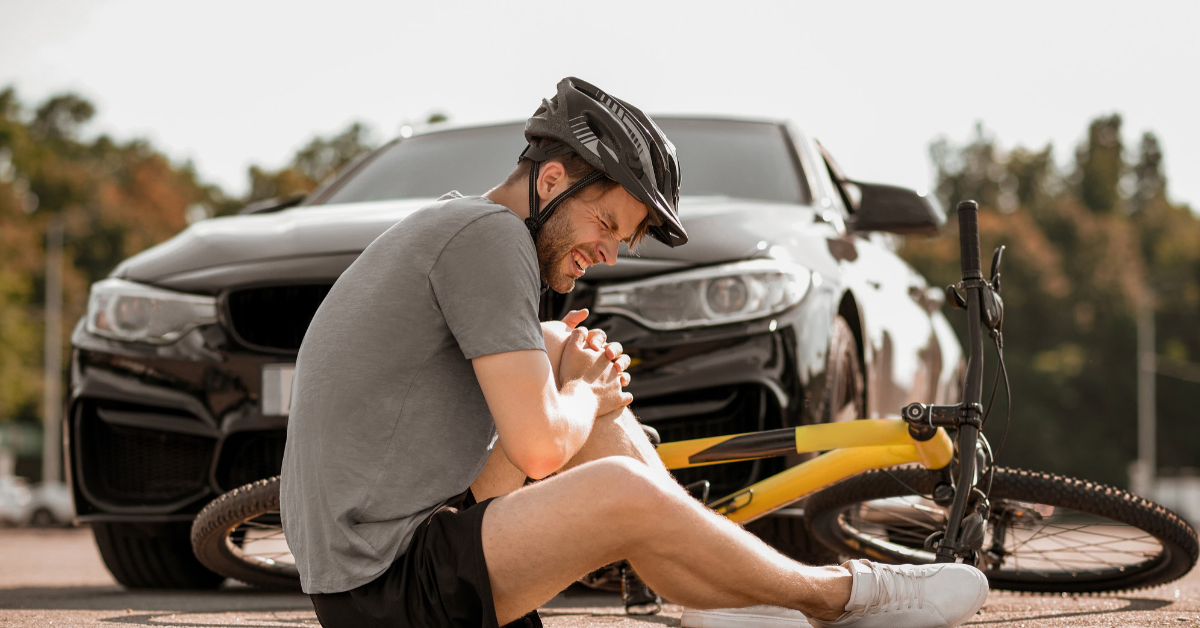
Walking and biking are both hailed as healthy forms of exercise as well as sustainable modes of transportation. At the same time, they also expose you to risks from careless motorists. When an Uber or Lyft driver fails to yield, turns without checking, or speeds through an intersection, the impact on a pedestrian or cyclist can cause broken bones, spinal injuries, or traumatic brain injuries.
What makes these crashes more complicated is that rideshare insurance coverage depends entirely on the driver’s status in the app when they struck you. That status can determine if only the driver’s personal insurance policy applies or if you can pursue up to $1,000,000 in liability coverage. In this article, we’ll go over what you need to know about pedestrian and cyclist Uber or Lyft accident claims in Georgia.
Why Rideshare Collisions Are Different for Pedestrians and Cyclists
When an Uber or Lyft driver hits you, liability coverage works differently than in a regular car accident. In a typical collision, the at-fault driver’s policy applies, and you pursue financial compensation from that insurance company. With rideshare services, who pays your medical expenses and lost wages depends on what the driver was doing at the moment of impact. Here are the three phases you need to know about:
- App Off: If the driver isn’t logged in, only their personal auto insurance policy applies. That leaves you limited to whatever liability limits they purchased, which can be as low as Georgia’s minimum of $25,000 per person for bodily injury.
- App On, No Trip Accepted: When the app is active but the driver hasn’t accepted a ride, contingent liability coverage applies. In Georgia, that coverage is at least $50,000 per person, $100,000 per crash, and $25,000 for property damage. However, it only applies if the driver’s personal insurance company either denies your claim or doesn’t provide enough coverage.
- En Route or Passenger Onboard: Once the driver accepts a trip or has a passenger in the car, Uber and Lyft provide up to $1,000,000 in third-party liability coverage. These policies apply to pedestrians and cyclists hit during an active ride. In addition, Georgia law requires uninsured/underinsured motorist coverage, but lawmakers reduced that limit in 2023 to $300,000 per crash, which affects you if another driver caused the collision and lacked adequate insurance.
To prove the higher coverage tiers apply in your claim, you have to prove the driver was logged into the app or had accepted a ride. For example, if a driver accepted a trip at 8:42 p.m. and struck you at 8:44 p.m., the $1,000,000 liability coverage applies. Without that trip record, the insurer may argue the driver was off duty.
Digital records are the key to proving this insurance coverage applies to your injuries. GPS routes, acceptance timestamps, and trip history confirm the driver’s status at the exact second of the crash. Securing that evidence quickly can mean the difference between pursuing an injury claim with policy limits of $25,000 under a personal auto policy or $1,000,000 under rideshare insurance.
What Compensation Can You Get in a Rideshare Accident Claim?
Being struck by an Uber or Lyft driver can inflict especially severe injuries on cyclists and pedestrians. Unlike motorists, they have no protection against violent external forces, so broken bones, spinal cord injuries, and even wrongful deaths are all common. The purpose of a rideshare accident claim is to recover compensation that addresses both immediate financial losses and the long-term consequences of your injuries.
- Medical Expenses: You can claim your medical bills for every stage of treatment, beginning with ambulance transport and emergency care and extending to hospital stays, surgery, diagnostic imaging, and prescription medication. Rehabilitation, such as physical therapy, chiropractic care, or occupational therapy, also falls under this category. If you need assistive devices like wheelchairs or braces, those costs can be included as well.
- Future Medical Needs: Some injuries need ongoing or permanent care. A spinal cord injury may involve multiple surgeries and long-term rehabilitation, while a traumatic brain injury may require cognitive therapy, neurological follow-ups, and daily in-home support. These costs are projected through medical evaluations and life care plans, which estimate the total expense over your lifetime.
- Lost Income: When your injuries prevent you from working, you can claim wages lost during your recovery. Documentation such as pay stubs, time sheets, or employer confirmation letters can all show the financial impact on your life. Self-employed individuals may need tax records or invoices to prove lost earnings.
- Reduced Earning Capacity: If you can return to work but can’t perform the same job, you may claim the difference between your pre-injury earning potential and what you can realistically earn now. For example, a cyclist who worked in construction but can no longer perform physical labor might need to move to lower-paying administrative work.
- Property Damage: Cyclists can claim the cost of repairing or replacing a damaged bicycle, helmet, and riding gear. High-value bikes can exceed thousands of dollars, and insurers often underestimate these losses unless receipts or appraisals are provided. Pedestrians may also recover the cost of phones, watches, and other personal property damaged in the crash.
- Pain and Suffering: Compensation also addresses the personal impact of your injuries. Chronic pain, limited mobility, and loss of independence are all compensable damages. The inability to participate in activities you once enjoyed, such as long rides, runs, or even playing with your children, can also be valued in your personal injury claim.
As you can see, insurance companies assess both economic and non-economic damages when determining the size of your settlement offer. To protect your recovery, it’s vital to keep a record of all expenses, medical appointments, and changes to your daily life. The more complete your documentation, the stronger your claim will be when insurers evaluate what the crash has cost you.
What if Your Injuries Exceed the Rideshare Policy Limits?
Most cases involving pedestrians and cyclists don’t exceed the $1,000,000 insurance policy. However, catastrophic injuries like traumatic brain injuries, paralysis, or amputations can push damages beyond that limit. In those situations, UM/UIM coverage becomes the next source of recovery. Medical payments (MedPay) coverage, if you carry it, can also provide immediate funds for treatment regardless of fault.
In rare cases, you may also have a personal injury claim against a city or county if a dangerous road condition contributed to the crash, but those claims involve strict notice deadlines and are best handled with help from a personal injury lawyer.
What to Do if You’ve Been Injured by a Rideshare Driver
The minutes and hours after being struck by an Uber or Lyft driver are critical. Not only do you need to get medical attention, but you’ll also want to secure evidence for your claim. Take the following steps, asking a bystander for help if necessary:
- Call 911: You should always get checked out after a motor vehicle accident, even if you don’t think you’ve been severely hurt. Paramedics can assess you at the scene, while responding police officers will create an accident report you can use later to prove liability.
- Document the Accident Scene: Photograph the entire roadway, including signals, crosswalks, skid marks, and lighting conditions. Capture images of the rideshare vehicle with visible Uber or Lyft identifiers, as well as your damaged bicycle or personal items. These images tie the collision to the driver and show context for how the crash occurred.
- Confirm the Driver’s App Status: The difference between a $25,000 personal policy and a $1,000,000 rideshare policy depends on whether or not the driver was actively working for the rideshare company at the time of the crash. Ask the officer to include this information in the report. If possible, obtain screenshots of the driver’s app or note the trip code to establish the exact status.
- Collect Witness Information: Independent witnesses can confirm how the accident happened. Names, phone numbers, and written statements all carry weight when insurers challenge your version of events.
- Notify All Insurers Immediately: File claims with the driver’s insurer, Uber or Lyft’s insurer, and your own UM/UIM or MedPay carrier. Notifying each party prevents disputes about late reporting and ensures that every available policy has been considered.
- Consult a Rideshare Accident Lawyer: These claims involve multiple insurers, strict deadlines, and app-based evidence that’s difficult to obtain without legal action. A personal injury lawyer can send preservation letters, confirm coverage, and protect you from adjusters who may try to minimize your injuries. Having counsel early on also ensures that deadlines tied to government claims or the two-year statute of limitations are met.
Common Causes of Rideshare Accidents Involving Pedestrians and Cyclists
Rideshare drivers are often working through an app while navigating traffic, which increases the risk of an accident. They’re also like any other motorist in that they can be prone to distracted driving, reckless driving, and making unsafe driving decisions.
- App Distractions: Uber and Lyft drivers rely on their phones for directions and ride requests. Glancing at the screen instead of watching the road reduces reaction time and makes it easy to miss a crossing pedestrian or cyclist.
- Unsafe Turns: Many crashes occur when drivers make left turns without checking crosswalks or right turns without yielding to cyclists riding alongside them. These errors are especially dangerous in intersections with heavy foot and bike traffic.
- Failure to Yield: Rideshare drivers frequently pick up or drop off passengers in areas with crosswalks or bike lanes. In the rush to collect or unload passengers, they may fail to yield, striking those with the right of way.
- Speeding and Sudden Lane Changes: Drivers working under pressure to complete rides may speed or cut across lanes to reach a pickup. These maneuvers reduce visibility and create hazards for pedestrians and cyclists crossing the road or riding near the curb.
- Illegal Stops and Double Parking: Stopping in bike lanes, bus lanes, or no-parking zones forces cyclists into traffic. It also blocks pedestrian visibility, increasing the chance of being struck when crossing.
- Fatigue from Long Hours: Many rideshare drivers work extended shifts or drive late at night. Fatigue slows reaction times and increases the risk of missing pedestrians in poorly lit areas or failing to see cyclists until it’s too late.
By documenting the exact cause, whether it’s distraction, unsafe turning, or fatigue, you can establish negligence. Clear evidence of how the collision occurred connects the driver’s actions to your injuries and helps you pursue the appropriate coverage.
How a Rideshare Accident Lawyer Can Help
With different insurance policies coming into play, Uber and Lyft injury accident claims are more complicated than ordinary car accidents. A rideshare accident lawyer can protect your right to compensation by:
- Identifying Available Coverage: Determining which insurance applies is the foundation of your claim. A lawyer can establish whether the driver was off the app, logged in without an accepted trip, or transporting a passenger. This analysis determines whether you are limited to the driver’s personal auto policy or entitled to pursue Uber or Lyft’s $1,000,000 liability coverage.
- Securing Digital Evidence: Uber and Lyft maintain extensive electronic records, including trip acceptance times, GPS routes, and driver activity logs. A lawyer can send preservation letters immediately to prevent these records from being deleted or overwritten.
- Coordinating Multiple Insurers: It is common for several insurers to be involved in one claim: the driver’s personal carrier, Uber or Lyft’s carrier, and your own UM/UIM or MedPay provider. A personal injury lawyer will manage communication with each insurer and work to prevent one from shifting blame onto another to delay payment.
- Challenging Comparative Fault Arguments: Insurers frequently argue that pedestrians or cyclists contributed to the crash by crossing mid-block, failing to use a crosswalk, or riding without required lighting. An attorney can counter these arguments with traffic camera footage, expert testimony, and scene reconstruction that demonstrate the rideshare driver’s negligence.
- Calculating the Full Value of Damages: Rideshare accidents can cause life-changing injuries. A personal injury lawyer documents all categories of loss, including emergency treatment, future medical care, rehabilitation costs, reduced earning ability, and non-economic damages such as chronic pain and loss of mobility. This ensures the full impact of the crash is reflected in your claim.
- Litigating When Negotiations Fail: If an insurance provider refuses to settle fairly, an injury lawyer can file suit and present your case in court. This includes adding other negligent drivers under Georgia’s apportionment law when multiple parties share responsibility. Litigation also allows your lawyer to subpoena additional records from Uber or Lyft if necessary.
By handling these issues on your behalf, your personal injury attorney improves your ability to secure the compensation you need to recover and rebuild.
We Get Justice for Injured Cyclists and Pedestrians
Pedestrians and cyclists injured by rideshare drivers face obstacles that go beyond a typical crash. The driver’s app status determines which insurance policy applies, but insurers frequently dispute that status to limit coverage. For example, they may argue the driver had logged out minutes before impact to avoid triggering Uber or Lyft’s $1,000,000 liability policy.
Because insurers work fast to limit responsibility, you need to act just as quickly to secure your rights. If you’ve been injured in a rideshare accident, call The Champion Firm, Personal Injury Attorneys, P.C. to schedule a free consultation. Our team will review your case, identify the policies that apply, and pursue the full compensation available to you. To learn more, call us today.
Related: